UNEP - PLASTIC WASTE TREATY IS GOING BACKWARDS


  IN 2022 THE UNEP PASSED A RESOLUTION TO END PLASTIC WASTE - TO PROTECT THE PLANET FOR FUTURE GENERATIONS

Please use our A-Z INDEX to navigate this site or see HOME


Third Part of the Fifth Session (INC-5.3) 7 February 2026 | Geneva, Switzerland

UN PRESS RELEASE


New Chair elected to lead negotiations on global plastic pollution treaty

Geneva, 7 February 2026 – The Intergovernmental Negotiating Committee (INC) to develop an international legally binding instrument on plastic pollution, including in the marine environment, today elected Ambassador Julio Cordano, of Chile, as the next INC Chair during the third part of the fifth session (INC-5.3).

In accepting the position, Ambassador Cordano said: “Plastic pollution is a planetary problem that affects every country, community and individual. Therefore, a treaty is urgently needed to support concerted action and bring us together to address this shared responsibility. I am willing and determined to play a leading role in helping the Committee cross the finish line.”

Following the election of Ambassador Cordano as Chair, the Committee elected Mr Linroy Christian of Antigua and Barbuda as Vice-Chair. This session solely focused on organizational purposes to address the election of officers, with no substantive negotiations held during the resumed session.

The Committee also expressed its appreciation to current Vice-Chair, Ambassador Johanna Lissinger-Peitz of Sweden, for supporting proceedings over the past several months ahead of INC-5.3.

Jyoti Mathur-Filipp, Executive Secretary of the INC Secretariat, said: “I congratulate Ambassador Cordano on his election and look forward to supporting the Committee under his leadership as it carries forward its mandate.”

The INC process was launched in March 2022 at the resumed fifth session of the UN Environment Assembly (UNEA-5.2), where Member States adopted a historic resolution to develop an international legally binding instrument on plastic pollution, including in the marine environment.

This session, held at the Geneva International Convention Centre, follows INC-5.2 in August 2025 that was also held in Geneva, Switzerland. That meeting was preceded by five INC sessions: INC-1 in Punta del Este, Uruguay, in November 2022; INC-2 in Paris, France, in June 2023; INC-3 in Nairobi, Kenya, in November 2023; INC-4 in Ottawa, Canada, in April 2024; and INC-5.1 in Busan, Republic of Korea, in November–December 2024.


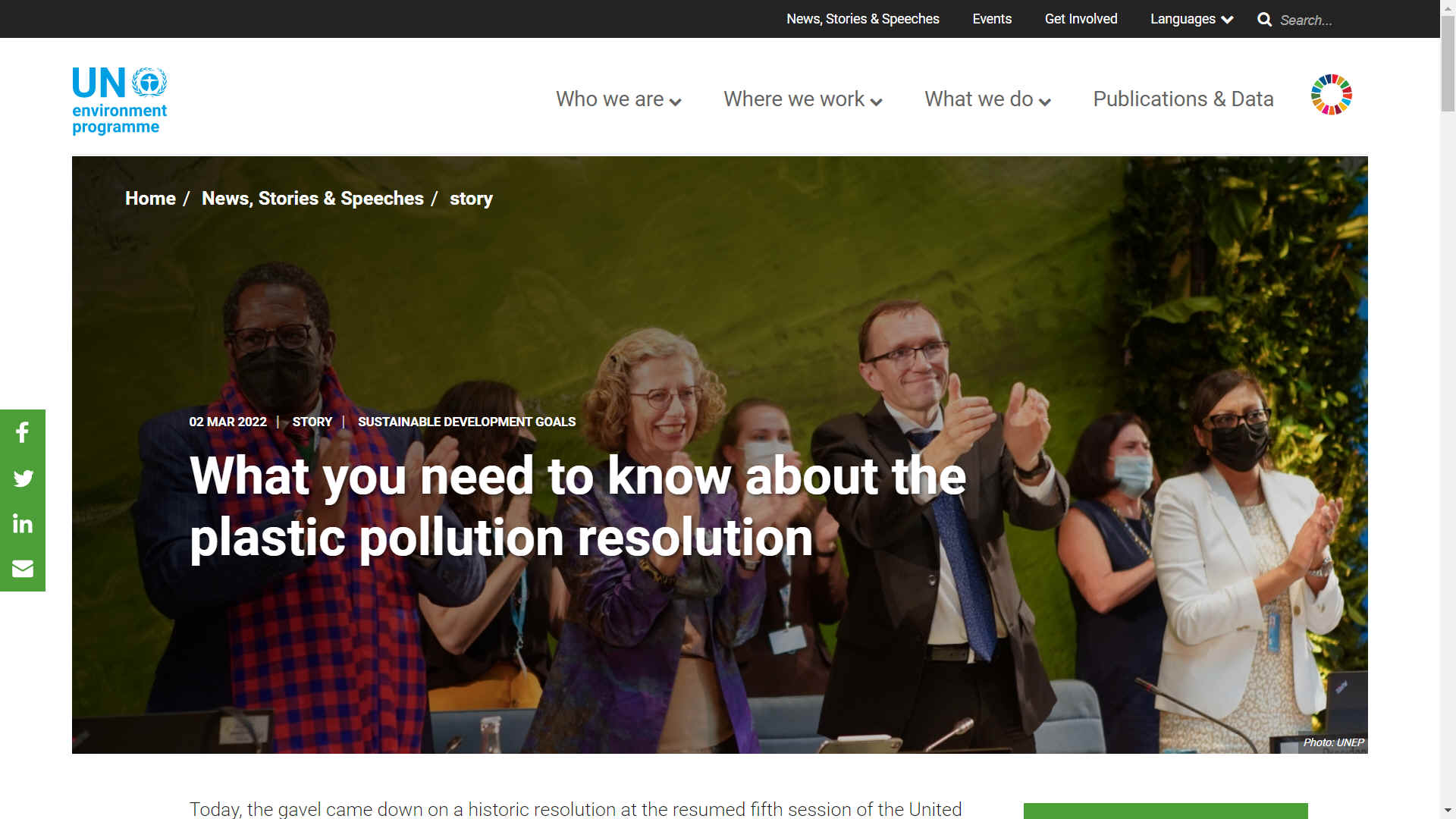
According to the UNEP website, in March 2022, at the resumed fifth session of the UN Environment Assembly (UNEA-5.2), a historic resolution was adopted to develop an international legally binding instrument on plastic pollution, including in the marine environment.

The UNEA resolution (5/14) requested the Executive Director of the UN Environment Programme (UNEP) to convene an Intergovernmental Negotiating Committee (INC) to develop "the instrument," which is to be based on a comprehensive approach that addresses the full life cycle of plastic, including its production, design, and disposal.

The INC began its work in the second half of 2022. It has since convened its first session (INC-1) in Punta del Este, Uruguay (November–December 2022); second session (INC-2) in Paris, France (May–June 2023); third session (INC-3) in Nairobi, Kenya (November 2023); and fourth session (INC-4) in Ottawa, Canada (April 2024). The fifth session has been held in parts: Busan, Republic of Korea (INC-5.1, November–December 2024) and Geneva, Switzerland (INC-5.2, August 2025). The third part (INC-5.3) took place on 7 February 2026 at the Geneva International Conference Centre (CICG). 

Following the resignation of the former INC Chair, the Bureau of the INC, at its meeting held on 30 October 2025, agreed that a one-day resumed session should be convened on 7 February 2026 for organizational and administrative purposes, addressing the election of officers, including the position of Chair. Accordingly, no substantive negotiations were held during INC-5.3.


Potential downstream solutions, like SeaVax, can never be viable, until there is an international agreement as to plastic production and waste recycling. This is made plain by the published articles below. No sane corporation, country or bank, would invest in any system to recover ocean plastic, until and unless the nations of the United Nations, are actually united. According to the Guardian article reproduced above as part of a media review, the Treaty that is necessary to move things forwards, is going backwards. Moving further away from any suggestion in 2022, that hope was on the horizon. Meantime, another 40 million tonnes of plastic has been dumped in the ocean. Tick, tock. The clock is counting down to poisonous plastic being a part of everything on the planet.


THE GUARDIAN 13 AUGUST 2026 - PLASTIC TREATY IS GOING BACKWARDS EXPERTS SAY


NGOs say agreement held back by tenuous human health commitments and lobbying from plastic industry.

The latest plastic treaty document signals even less ambition than the last draft of the long overdue UN agreement, according to experts.

A year after UN plastics treaty negotiations collapsed in Geneva in 2025, diplomats met informally in Nairobi between 30 June and 3 July, aiming to flesh out a new “no surprises” document.

The chair of the process, Julio Cordano, the Chilean ambassador to the UN, took over in February with the objective “to deliver an effective response to end plastic pollution through an international legally binding instrument”.

A new document related to the treaty was published earlier this week, which Cordano described as “an informal, evolving reference document”. While he said he was “encouraged by members’ continued engagement and commitment”, there was still work to be done.

However, Andrés del Castillo, a senior attorney at the Center for International Environmental Law, said: “Science and reality are not adapting to the geopolitical context.”

He said that in the middle of the fifth consecutive heatwave in Europe, the latest document was “very similar, if not the same, to the last draft released one year ago, with more brackets – mainly everything related to production, health and chemicals”.

The managing director of the environmental NGO OceanCare, Fabienne McLellan, agreed. “It is basically one large bracket,” she said, adding that it contained text similar to that previously rejected in Geneva.

Brackets in the text indicate disagreement and in effect put the treaty’s objective to protect human health from the impact of plastics up for debate. From a public health perspective, this is of deep concern when “the science is clear”, according to Megan Deeney, a research fellow at the London School of Hygiene and Tropical Medicine.

“Human health appears just nine times in the substantive articles of the text,” she said – with seven of these bracketed – “meaning they could be lost altogether in further negotiations.” Overall, “the protection of our health and that of generations to come is tenuous in this treaty,” she added.

A treaty that suggests “we only want to protect the environment” would not include in its scope the recent injustices of Turkey’s microplastic pollution from UK waste or microplastics in recycled food waste contaminating agricultural soils.

The previous treaty collapsed because agreement could not be reached on the crucial issue of resolving to reduce production. At the conference in Geneva last summer, countries worked past the deadline but could not break the deadlock on whether to reduce exponential growth of plastic production and place global, legally binding controls on toxic chemicals used to make plastics.

The negotiations have tested to the limit the UN consensus system – which is reached when member states agree on the text of the treaty. Del Castillo said the negotiations needed an alternative option when consensus could not be reached, as without it, “we risk the same inertia that has slowed climate action for decades”.

At the talks last year, some NGOs said they had “lost faith” in the process after most countries wanted a cap on plastic production but a small but powerful minority of oil and plastic producing nations continued to reject the idea. Some argued the system was being “weaponised”.

The next round of negotiations are scheduled for March 2027, marking an unusually long period of 18 months between the talks. Ultimately, the text needed to focus on the “how”, del Castillo said.

Environmental groups are increasingly speaking out about what McLellan calls “the elephant in the room” in ending plastic pollution: “Untamed plastic production based on fossil feedstock.”

She argues that the lobbying from this industry is “particularly troubling because plastics and fossil fuels cannot be credibly treated as separate policy issues”.

McLellan said there was a real risk that what emerged was “essentially a waste-management treaty” that does not acknowledge the ultimate source of plastic pollution, which is fossil fuel production. Yet, the plastics and climate crises have remained siloed, even as fossil fuel companies themselves are now turning to plastics production in the face of increased global demand for renewables.

Despite this, del Castillo stressed the importance of civil society involvement to maintain accountability and ensure countries do not decrease ambition. “There’s still time for countries to deliver,” he said.


Sheila Aggarwai Khan  Plastic pollution resolution February 2022 fifth assembly


Sheila Aggarwai-Khan - Click on the picture to read 


SEAVAX 2AI - SEPTEMBER 2026


Potential downstream solutions, like SeaVax, can never be viable, until there is an international agreement as to plastic production and waste recycling. This is made plain by the published articles below. No sane corporation, country or bank, would invest in any system to recover ocean plastic, until and unless the nations of the United Nations, are actually united. According to the Guardian article reproduced above as part of a media review, the Treaty that is necessary to move things forwards, is going backwards. Moving further away from any suggestion in 2022, that hope was on the horizon. Meantime, another 40 million tonnes of plastic has been dumped in the ocean. Tick, tock. The clock is counting down to poisonous plastic being a part of everything on the planet.


THE UNITED NATIONS UNEP - Could SeaVax be a part solution for UN goals?


CAPEX AND OPEX - What level of G20 investment is required?


HEALTHIER OCEANS & BLUE GROWTH - What are the health benefits?


INVESTABILITY - Can SeaVax 2.0 AI be a commercial success?


WHERE DOES AI COME IN? - Will artificial intelligence make a difference?


WHAT IS THE MARKET VALUE OF OCEAN PLASTIC? - Is it worth fishing for marine plastic? 


CERTIFICATION - How will the ocean plastic be verified for credits?


WORLD BANK, IMF & UNEP - Are there any match funding opportunities?


PATENT APPLICATION - GB2622325.5 23rd September 2026

PATENT ABSTRACT - DESCRIPTION - CLAIMS


Patent application, UK intellectual property office

GB2622325.5 filing dated 23 September 2026. AI driven autonomous ocean cleaning vessel fleet management system architecture


PLASTIC WASTE


Every minute, the equivalent of one garbage truck of plastic is dumped into our ocean. 

Plastic pollution is a global problem. Approximately 7 billion of the 9.2 billion tonnes of plastic produced from 1950-2017 became plastic waste, ending up in landfills or dumped.

Plastic pollution can alter habitats and natural processes, reducing ecosystems’ ability to adapt to climate change, directly affecting millions of people’s livelihoods, food production capabilities and social well-being. 

UNEP’s body of work demonstrates that the problem of plastic pollution doesn’t exist in a vacuum. The environmental, social, economic and health risks of plastics need to be assessed alongside other environmental stressors, like climate change, ecosystem degradation and resource use.


Today (2nd March 2022) the gavel came down on a historic resolution at the resumed fifth session of the United Nations Environment Assembly (UNEA-5.2) in Nairobi to end plastic pollution and forge an international legally binding agreement by 2024.

Heads of State, Ministers of environment and other representatives from UN Member States endorsed this landmark agreement that addresses the full lifecycle of plastic from source to sea. Plastic production has risen exponentially in the last decades and now amounts to some 400 million tons per year– a figure set to double by 2040.

Inger Andersen, Executive Director of the UN Environment Programme (UNEP), said the agreement is the most important international multilateral environmental deal since the Paris climate accord of 2015.


GHOST FISHING GEAR - REPORT BY SECRETARIAT ON THE CONVENTION OF BIOLOGICAL DIVERSITY


The total number of species known to be affected by marine debris is now almost 800 (including effects of ghost fishing reported in recent years). The proportion of cetacean and seabird species affected by marine debris ingestion has risen substantially to 40 per cent and 44 per cent, respectively.


The latest research on the physical and toxicological effects of microplastic is summarized along with evidence of trophic transfer in planktonic food chains in the laboratory and direct uptake of microplastics by invertebrates in the marine environment. Results of studies of plastic marine debris as a novel habitat for unique microbial communities and a potential vector for disease are also provided. The report also addresses the ability of large macrodebris items to transport invasive alien species across oceans, based on evidence from recent records of tsunami debris stranding along the west coast of North America. The impacts of lost, abandoned or discarded fishing gear on marine biodiversity, including long-term effects of ghost fishing and habitat degradation mainly from plastic-based gear.


Marine debris has been identified as a global problem alongside other key environmental issues, such as climate change, ocean acidification and the loss of biodiversity. It is regarded as one of the most significant problems for the marine environment and a major threat to biodiversity. Marine debris is aesthetically detrimental, a hazard to commercial shipping and fishing vessels, can facilitate the transport of organic and inorganic contaminants and is harmful to marine organisms and potentially also humans.

Three-quarters of all marine debris is plastic, which contaminates habitats from the poles to the equator and from shorelines to the deep-sea. In short, marine debris is damaging to the economy, to wildlife and to the environment; there is universal agreement that it needs to be addressed urgently.

Plastic materials are a particular cause for concern due to their persistence and inherent or acquired toxicity. Discarded plastics degrade and fragment into millions of microplastic pieces, enabling them to be taken up by a wide range of marine biota, from primary producers to higher trophic-level organisms, and more likely to infiltrate food webs10. Annual plastic production has increased markedly over the last 60 years, from 1.5 million tonnes in the 1950s to 288 million tonnes in 2012, with approximately two-thirds of production occurring in East Asia, Europe and North America. One third of global production is disposable / single-use packaging that is discarded within a year.


Plastics are inherently recyclable, although overall recycling rates are currently low for most countries. By recycling end-of-life plastic, it is possible to reduce the accumulation of marine debris but also reduce our demand for fossil fuels. Approximately 8 per cent of global oil production is used to make plastic items, with natural gas also contributing to the production of plastics. Demand for plastic continues to grow.


Forecasts indicate that plastic production will reach 33 billion tonnes by 2050, based on current consumption trends. Current global estimates for plastic waste indicate that 192 coastal countries generated 275 million tonnes of waste in 2010, of which between 4.8 and 12.7 million tonnes (1.8 - 4.6 per cent) entered the marine environment. The continual fragmentation of plastic debris items into microplastics means that it is inevitable that microplastic debris will accumulate in the marine environment.


KEY MESSAGES

1. More than 800 marine and coastal species are affected by marine debris through ingestion, entanglement, ghost fishing and dispersal by rafting as well as habitat effects.


2. More than 500 marine and coastal species are affected by ingestion of, or entanglement in, marine debris, which includes the effects of ghost fishing.


3. The number of seabird and marine mammal species affected by marine debris ingestion or entanglement is steadily rising.


4. There is increasing recognition of the impact of ghost fishing, with both ecological and socio-economic effects being reported.


5. Microplastics are present in all marine habitats and from the ocean surface to the seabed, and are available to every level of the food web, from primary producers to higher trophic levels.


6. Microplastics are also providing a new habitat in the oceans for microbial communities, although the effects on ocean ecosystems and processes are not yet understood.


7. Although laboratory-based studies have indicated that plastics containing hazardous chemicals can have a detrimental effect on the health of marine organisms, this phenomena has not been clearly shown in the marine environment.


Solutions like SeaVax (above) have been sitting on the shelf, with no takers. Maybe now eco entrepreneurs might get the support they need to make things happen. Previously, the pollution culprits were looking for a free lunch. Such machines can deal with ghost fishing nets and micro plastic. This concept was killed off in 2020, after three attempts to obtain funding from Horizon Europe. And two attempts in the UK. The same basic platform, could have been adapted to sweep the Caribbean sea clean of sargassum. By replacing solar/wind power with solar/hydrogen power.


But first, we need to do all we can to turn the plastic tap OFF! It's foolish to try to repair a leaky roof while the rain is pouring in. Funds need to be made available to Maverick developers, not academics or existing corporations - who should have developed solutions by now from their lavish budgets. SeaVax2 AI, is an improved version of the concept, though still in need of funds to produce an artificially intelligent development of the original ocean drone. With many navies now adopting drone ships, that is nothing new. But with AI in the melting pot. Will that make any difference, where the global plastic players cannot reach agreement.


'UNEP' is the United Nations Environment Programme. Their mission is to provide leadership and encourage partnership in caring for the environment by inspiring, informing, and enabling nations and peoples to improve their quality of life without compromising that of future generations. In our view leadership equals actions. Doing not talking about doing. The difference between having an idea, and doing it - is doing it. Anyone can talk about doing things and encourage other people to take risks and think creatively, but few step into the arena and act on their ideas - putting their time and money where their mouths are.


CARTEGENA CONVENTION

FUNDING ENVIRONMENTAL STRATEGIC ACTION

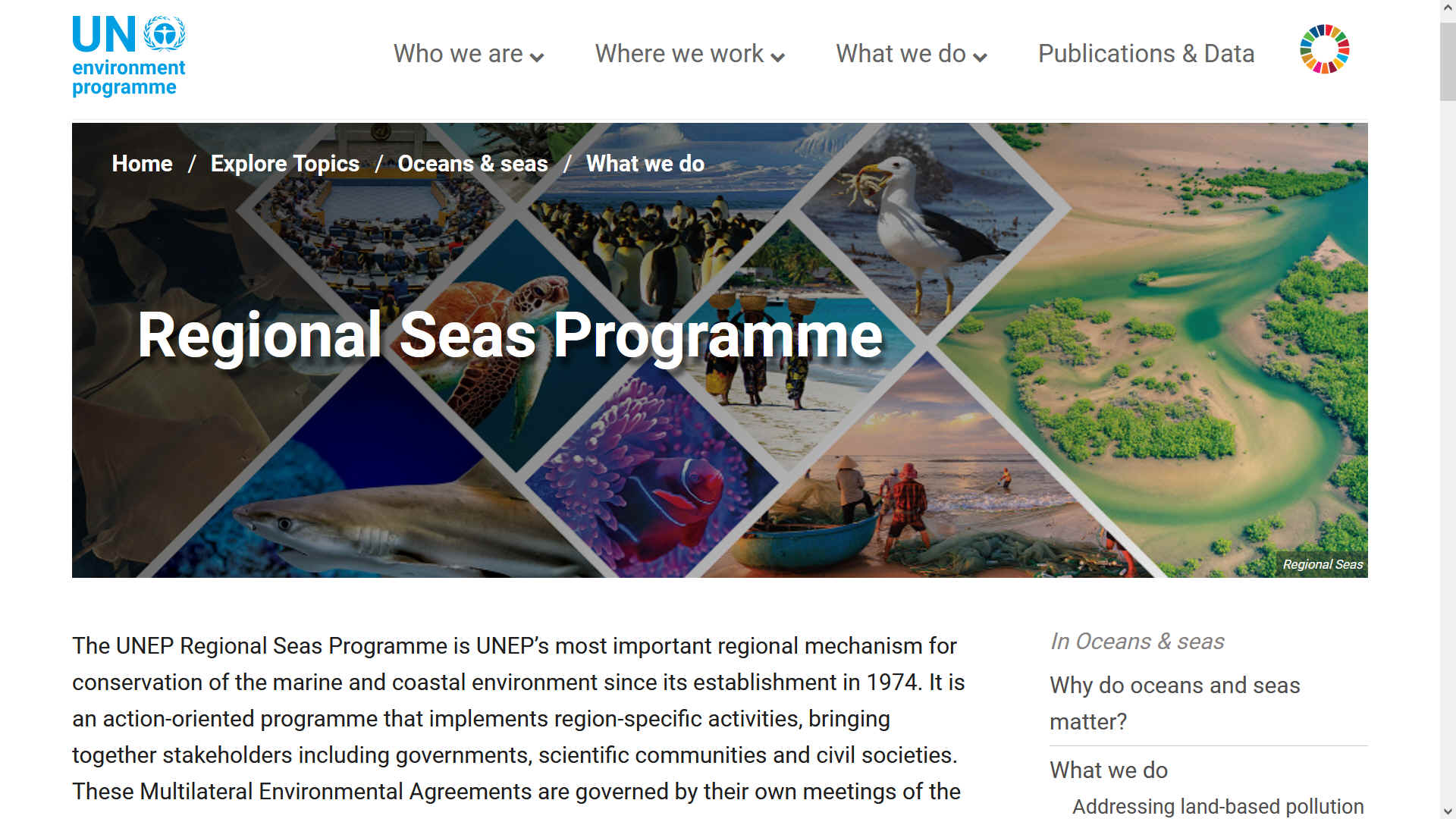
REGIONAL SEAS PROGRAMME

SARGASSUM WHITE PAPER - TURNING A CRISIS INTO AN OPPORTUNITY

UNITED NATIONS


CONTACTS


UNEP

United Nations Avenue, Gigiri
PO Box 30552, 00100
Nairobi, Kenya


Tel: +254 (0)20 762 1234
Email: unep-newsdesk@un.org
Media enquiries: unep-newsdesk@un.org

Caribbean Environment Programme (CEP)

Address : 14-20 Port Royal Street

Kingston, Jamaica W.I.

Tel.: 1 (876) 922-9267 (Ext: 6253) ; Fax: 1 (876) 922-9292
E-mail : unep-cartagenaconvention@un.org

Website: https://www.unenvironment.org/cep/


Office of the Secretariat of Governing Bodies
unep-sgb@un.org

Executive Office of the United Nations Environment Programme
unep-executiveoffice@un.org

Office of the Director of the Ecosystems Division
unep-director-ecosystems@un.org

Office of the Director of the Policy Programme Division
unep-policyprogramme-director@un.org

Office of the Director of the Science Division
unep-science-director@un.org

Regional Office for Latin America and the Caribbean
Unep-caribbean@un.org

Regional Office for Latin America and the Caribbean (Mexico)
pnuma.mexico@gmail.com

Regional Office for Latin America and the Caribbean (Uruguay)
subregional.conosur@pnuma.org

Regional Office for Africa
unep-africa@un.org

Regional Office for South Africa
infosouthafrica@un.org

Regional Office for West Africa
Angele.Luh@unep.org

Regional Office for Latin America and the Caribbean
unep-latinamerica@un.org

Regional Office for Latin America and the Caribbean
unenvironment-latinamerica-braziloffice@un.org

Regional Office for Africa
samba.harouna@un.org

Regional Office for North America
unep-northamerica@un.org


Regional Office for Europe
unep-eu@un.org

Regional Office for Europe (Vienna)
unenvironment.vienna@un.org


LINKS & REFERENCE


https://enb.iisd.org/plastic-pollution-marine-environment-negotiating-committee-inc5.3

https://www.unep.org/inc-plastic-pollution

https://www.theguardian.com/environment/2026/aug/13/new-un-plastic-treaty-going-backwards-experts


Unted Nations Regional Seas Enviroment Programme


WORLD PEACE - May only be achieved when member nations fully endorse and action sustainable development, such that food, energy, housing and industry all work together like a well oiled machine, in harmony with nature. Working in harmony, means not over-exploiting mother earth's natural resources, not killing flora or fauna past their recovery limits, and not adding to global warming.


Please use our A-Z INDEX to navigate this site, or return HOME


This website is Copyright © 2026 Climate Change Trust & Injustice Alliance The views, performance reviews and opinions of the Trust are protected by Articles 18 and 19 of the Universal Declaration of Human Rights.